
Broad-Beam Ion Milling
Ion beam milling is a unique method of sample preparation that complements and significantly extends the capabilities of the traditional microscopy and metallographic laboratories.
EDS analysis detects x-rays emitted from the sample during bombardment by the SEM electron beam and characterizes the elemental chemical composition of the analyzed volume. EDS is capable of obtaining rapid qualitative chemical information, semi-quantitative composition determinations, maps showing lateral distribution of chemical elements, and compositional profiles across a surface. All stable elements can be detected with the exception of hydrogen, helium, and lithium. Our JEOL 6610LV is equipped with the latest silicon drift detector (SDD), which provides a very high x-ray throughput. This results in fast x-ray data acquisition, increased sensitivity to elements in small concentrations, and advanced spectral imaging. Together, SEM and EDS provide an excellent combination for efficient characterization of sample surfaces and the elements comprising specific near-surface features.
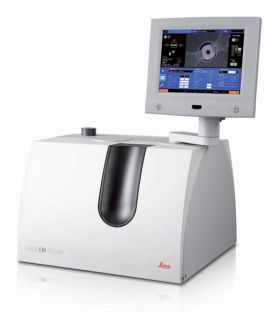
Typical Applications
- Preparing cross sections of semi-conductor devices
- Removing contamination films
- Removing thin plating layers to reveal substrate
- Surface modification to reveal microstructure for materials difficult to chemically etch
- Sectioning of soft materials or soft-hard material combinations
Contact us to discuss which evaluation method is best suited to solve your materials-related problems. Or visit our Handbook of Analytical Methods for Materials (HAMM) for more in-depth explanations and typical applications of the analytical methods used for the characterization and evaluation of materials and products.
Visit the HAMM for more information
The Handbook of Analytical Methods for Materials (HAMM) is a brief tutorial on techniques for materials characterization. The HAMM is intended to provide our visitors with enough information on a technique to determine whether it has the potential to help solve a materials problem.